This one is basically taking graphite, sticking it to water, blowing some air on it to produce flakes and those flakes can then be used to create graphene coating.
You can find the full article here on EurekAlert.com
A new generation of nuclear reactors called pebble-bed nuclear reactors use large amounts of flake graphite. These reactors get their name from the pebble-sized spheres of graphite mixed with uranium that they contain. “This structure allows pebble bed reactors to produce power more efficiently – and safely – than conventional reactors,” Alex Cowie, editor of Diggers & Drillers, wrote recently. “This technology means nuclear reactors can be smaller, and as easy to run as turning a switch.”
“The EPSRC is no longer allocating funds on a fair and transparent basis,” the letter says. “Excellence is a secondary consideration. The wealth of talent following new ideas, which could and would compete for such funding, is being side-lined on the whims of administrators. Non-competitive processes, in whatever arena, are a poor investment and such misuse of public funds is deeply worrying.”
Sir Andre Geim, the scientist from the University of Manchester who discovered the "wonder material" graphene with colleague Professor Konstantin Novoselov, has been awarded a knighthood.
Scientists Invent Graphene for Wearable Electronics, Mirrors
Tom's Hardware Guide The new material is call GraphExeter and is based on two graphene layers with ferric chloride molecules between them. According to the research report, ferric chloride greatly improves the electrical conductivity of graphene, but do not affect its ... |
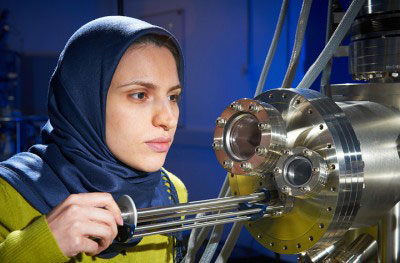
The new laboratory, officially opened by our Vice-Chancellor Professor Dame Glynis Breakwell on Tuesday 1 May, forms part of the Centre for Graphene Science, which brings together expertise at the Universities of Bath and Exeter. Professor Simon Bending from the University's Department of Physics said: "Graphene is a remarkable material made of a single layer of carbon atoms. Combining high strength, transparency and flexibility with excellent electrical and thermal conductivity, it has many potential applications."Building atomic structures an atom at a time could be one of the great achievements of our time, there has long been talk of atomic scale robots for medical use. Perhaps when Skynet finally does take over it won't be with large humanoid robots, but instead by microscopic death machines.